
Feature · Adaptive tutoring
Adaptive AI Tutoring That Moves at Your Child's Pace
Adaptive tutoring in StudyMate AI is adaptive learning AI that sets the pace and difficulty of practice by what a student already knows, stepping up through three levels only after correct answers.
5,000 free credits, no cardUpdated
- Know it, use it, reason with it
- 3 levels
- Moves the next question up or down
- Every answer
- Each wrong answer, before the next question
- Explained
- To set up, with nothing to install
- ~5 min
The problem
Why One-Speed Practice Doesn't Work
A class moves at one speed, and so does a printed worksheet. Students rarely do.
Bored by the basics
A student who already knows a concept spends practice time proving it again instead of moving on.
Lost in the hard parts
A student still unsure of the basics meets questions that assume they aren't, and stalls.
Mistakes that go nowhere
A wrong answer marked with a cross and left there doesn't change what the student practices next.
How it works
How Adaptive Tutoring Works, Answer by Answer
Every answer is information. StudyMate uses each one to decide what the student sees next.
Start from what they know
Practice begins from what the student has already shown they know, and basics they have cleared are skipped.
Step up after a correct answer
A correct answer moves the next question up a level, from knowing a concept to using it to reasoning with it.
Step down after a wrong one
A wrong answer brings a short explanation and an easier question, so the same idea gets another go from firmer ground.
Three Levels: Know, Use, Reason
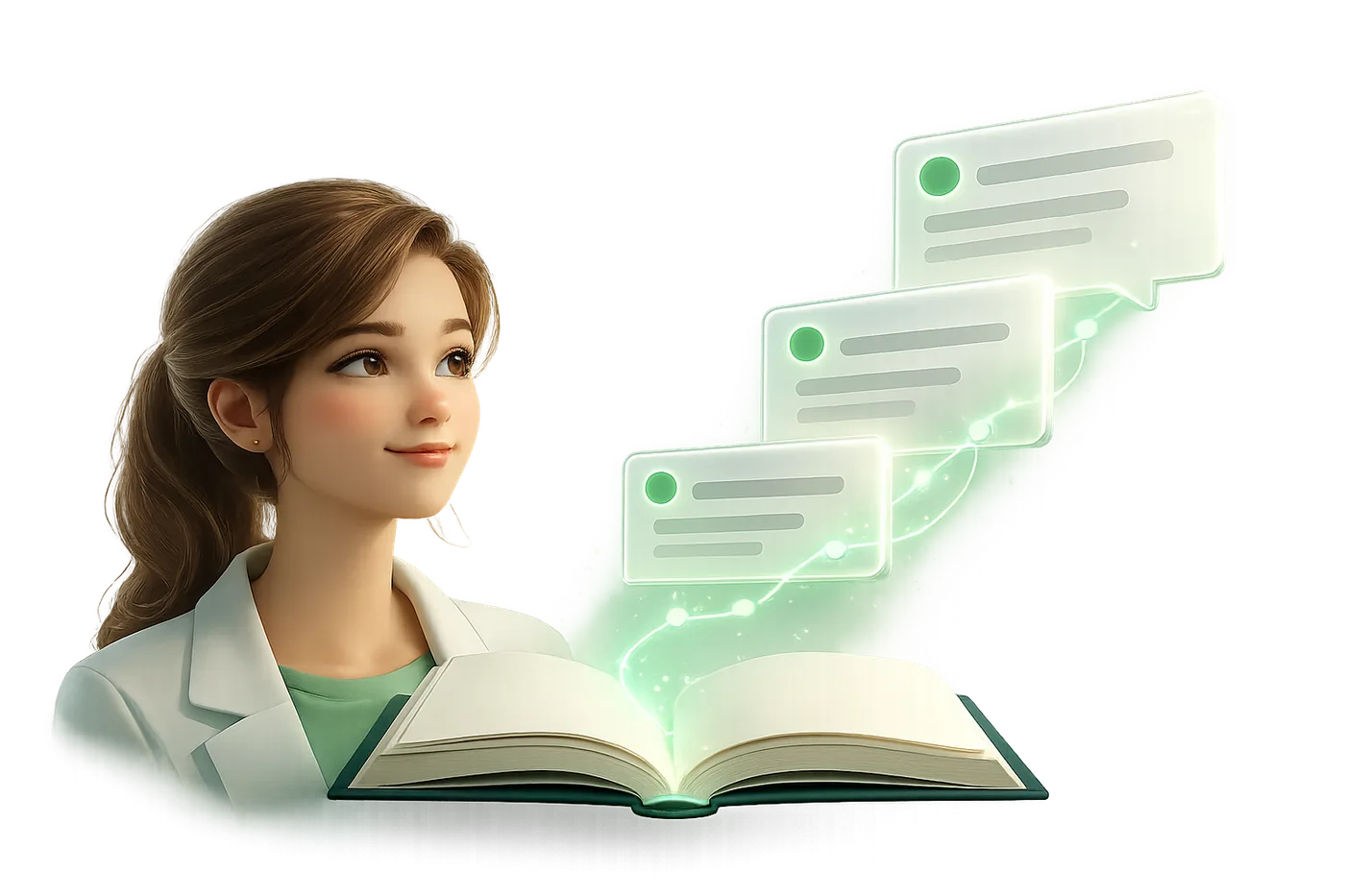
Every topic is practiced at three levels, and each one asks more of the student than the last: Basic checks whether they know the concept, Medium whether they can use it and Advanced whether they can reason with it.
Working through the levels in order means a student isn't asked to reason about an idea before they can recall it, and isn't held at recall once they can do more.
The three levels
What Each Level Asks
One Class 8 Mathematics topic, rational numbers, run through all three levels in the sample test on our homepage:
| Level | What it checks | Sample question |
|---|---|---|
| Basic | Whether the student knows the concept | Which of these is a rational number? |
| Medium | Whether they can use it | Simplify: 2/3 + 5/6 |
| Advanced | Whether they can reason with it | Closure under division fails for rational numbers because of which case? |
Harder Only When They're Ready
Class moves at one speed, so some students are bored by the basics while others are still lost. StudyMate works the other way round. It starts from what the student has already shown they know and skips the basics they have cleared, so practice time goes to what they haven't mastered yet.
A correct answer moves the next question up a level. Difficulty rises only after the student has shown they can handle the level below, which is what makes StudyMate behave like a personalized AI tutor rather than a fixed worksheet.
A Wrong Answer Shapes What Comes Next
A wrong answer brings a short explanation and steps the difficulty back down. The mistake changes the next question instead of being corrected and forgotten, so the student gets another go at the same idea from an easier starting point.
Explanations stay inside the student's own textbook, the same way chat answers come from the open chapter. StudyMate explains rather than hands over answers, and the progress report shows which chapters still have gaps.
Comparison
Adaptive Practice vs a Fixed Worksheet
Both give a student questions to answer. Only one changes the next question based on the last answer.
| Feature | StudyMate adaptive tutoring | Fixed worksheet |
|---|---|---|
| Difficulty | Moves up or down after every answer | Set in advance, the same for everyone |
| Basics already known | Skipped | Practiced again |
| After a wrong answer | A short explanation, then an easier question | A mark, often after the class has moved on |
| Where questions come from | The chapter being studied, within the board and class chosen at setup | Whatever the worksheet happens to cover |
| What it shows afterwards | Which chapters still have gaps, in the progress report | A total score |
What to Look for in Adaptive Learning Tools
When comparing adaptive learning tools, four questions separate practice that adapts from practice that only claims to:
- Where do the questions come from? Practice should follow the syllabus the student is taught from, not a generic question pool.
- What happens after a mistake? Look for an explanation before the next question, not just a mark.
- Does difficulty move both ways? A tool that only gets harder leaves a struggling student behind.
- Can you see where the gaps are? Progress by chapter shows what still needs work, which a single average can hide.
In StudyMate, practice stays inside the chapter the student is studying, within the board and class chosen at setup, and a wrong answer always comes with an explanation before the next question.
The approach
Built to Teach, Not Just to Test
Adaptive practice only helps if the student learns from it, so every step is built around explaining first.
Explains first
A wrong answer brings a short explanation of the reasoning before the next question.
Stays in the book
Practice and explanations come from the student's own textbook, within their board and class.
Shows the gaps
The progress report shows which chapters still need work, weakest first.
Who it's for
Who Is Adaptive Tutoring For?
Any student whose practice should match where they are, not where the class is.
Students ahead of the class
Basics they have cleared are skipped, so practice moves on to the harder levels sooner.
Students who need more time
Difficulty steps down after a wrong answer, with an explanation, until the idea is solid.
Students revising for exams
Practice works from the chapters they are revising, at the level they are ready for. See AI revision for school exams.
Parents following along
The chapter-by-chapter report is something you can look through together to see where practice is going.
FAQs
Adaptive Tutoring FAQs
7 straight answers to what parents and students ask before they start.
Still have a question?
Email the team, or read the full FAQ on accounts, credits and data.
Will the questions be too easy or too hard?
They adjust with every answer. A correct answer moves the next question up a level, and a wrong one brings an explanation and an easier question. Basics the student has already cleared are skipped.
What do Basic, Medium and Advanced mean?
Basic checks whether the student knows a concept, Medium whether they can use it and Advanced whether they can reason with it.
Does it just give my child the answer after a mistake?
No. A wrong answer brings a short explanation of the reasoning and then an easier question on the same idea, so the student works it out rather than copying a result.
Which subjects can my child practice?
Practice works from the chapters on the student's bookshelf, which depend on the board and class chosen at setup. The sample test on our homepage includes Mathematics and Science topics.
Can we try it before signing up?
Yes. The sample test on our homepage runs a short set of questions at rising difficulty, with no account needed.
Is there anything to install?
No. StudyMate is a web app. Setup takes about five minutes in one sitting, and practice can start straight after.
What does it cost to try?
New accounts start with 5,000 free credits and no card is required. Setup takes about five minutes and there is nothing to install.
Keep going
Explore More StudyMate Features
Adaptive practice works best alongside an explanation from the book and a clear picture of progress.
Chat With Your Textbook
Ask any chapter a question and get a plain-language answer with the page cited.
Practice Tests and Progress
Papers from any chapter, instant evaluation and a weakest-first study list.
Exam Revision
Chapter-by-chapter revision for school tests and board exams.
How It Works
From a new account to the first answer in about five minutes.
Your turn
See It Adapt in Two Minutes
Try the sample test on our homepage, then set up a free account to practice from your child's own textbooks.
5,000 free credits to start. No card required.
Get started in 3 steps
~5 min- 1Create an accountAbout 30 seconds
- 2Choose the board and classAbout 1 minute
- 3Open the hardest chapterAsk it anything
- Page cited on every answer
- Explains before it tests
- Nothing to install